Perfect Curve Backpad

Realign. Relieve. Restore.

How the Perfect Curve Lumbar Orthotic Works

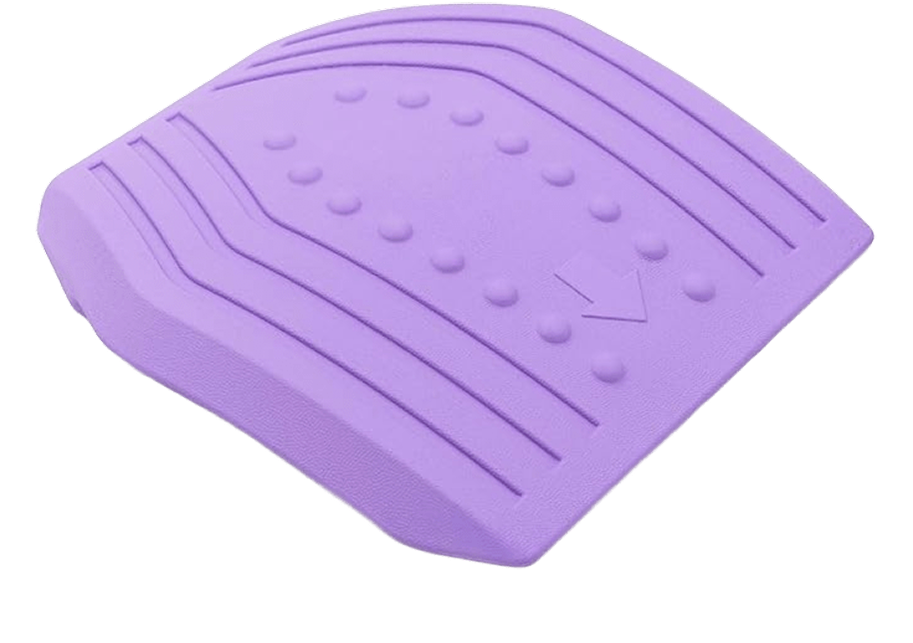
The Perfect Curve Lumbar Orthotic is designed to relax, support, and restore the natural lumbar curve in the lower spine. Over time, daily sitting and poor posture can flatten or distort this curve, placing extra stress on the discs, joints, nerves, and supporting soft tissues. This orthotic serves as a corrective template that guides the spine back toward its ideal shape.

Supports the Spine in Lying or Sitting

The device can be used while lying supine or while sitting. In either position, it fills the space behind the lower back, providing structured lumbar support. By restoring the lumbar curve, the orthotic helps reduce pressure on the nerves that exit the spine—nerves that control the organs, cells, tissues, and functions in the surrounding region, including both the sympathetic and parasympathetic nervous systems.

How the Perfect Curve Gently Guides the Spine Into Alignment

When the user places their lower back against the orthotic, its contoured shape acts as a template for the optimal lumbar curve. Gravity then does the work:

The spine settles naturally into the support
The ligaments, tendons, and soft tissues lengthen gradually
The pelvis shifts toward a healthier, more neutral alignment
This gentle, progressive realignment helps restore the lumbar lordosis without forcing the body into an uncomfortable position.

Enhances Overall Structure, Function, and Confidence

Reduced muscular tension

Improved spinal mechanics

Better sitting tolerance

Relief from nerve-related discomfort

Technical Description Focused on Disc Decompression & Nerve Function

The Perfect Curve Lumbar Orthotic is engineered to restore the lumbar lordosis curve in order to reduce axial compression on the spinal discs and nerves, decompress intervertebral discs, and optimize neural function in the lumbosacral region.

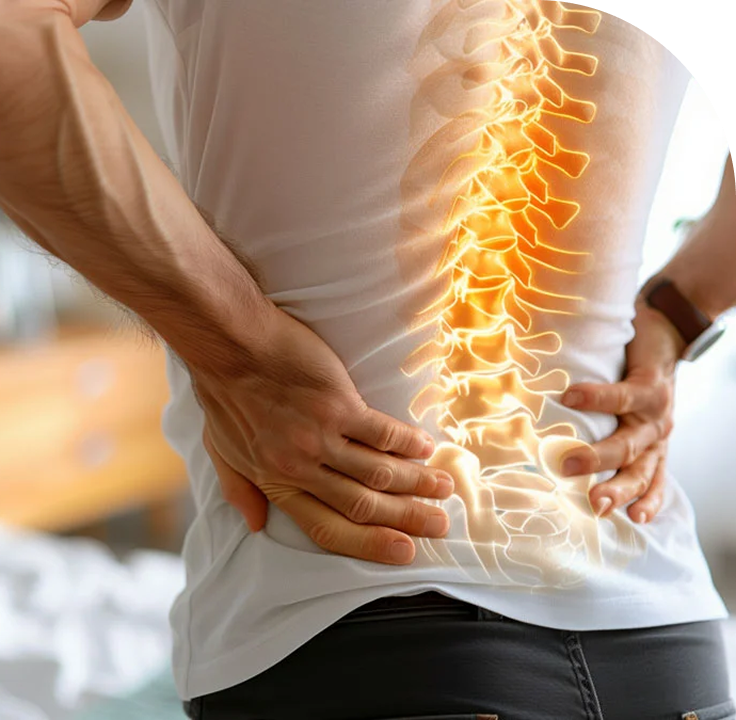
In a normal spine, the lumbar curve distributes mechanical loads evenly across the vertebral bodies and intervertebral discs. However, prolonged sitting, flexion-biased posture, and loss of lordosis shift these loads posteriorly, increasing disc pressure, narrowing disc height, and reducing the available space in the intervertebral foramina where the spinal nerves exit.

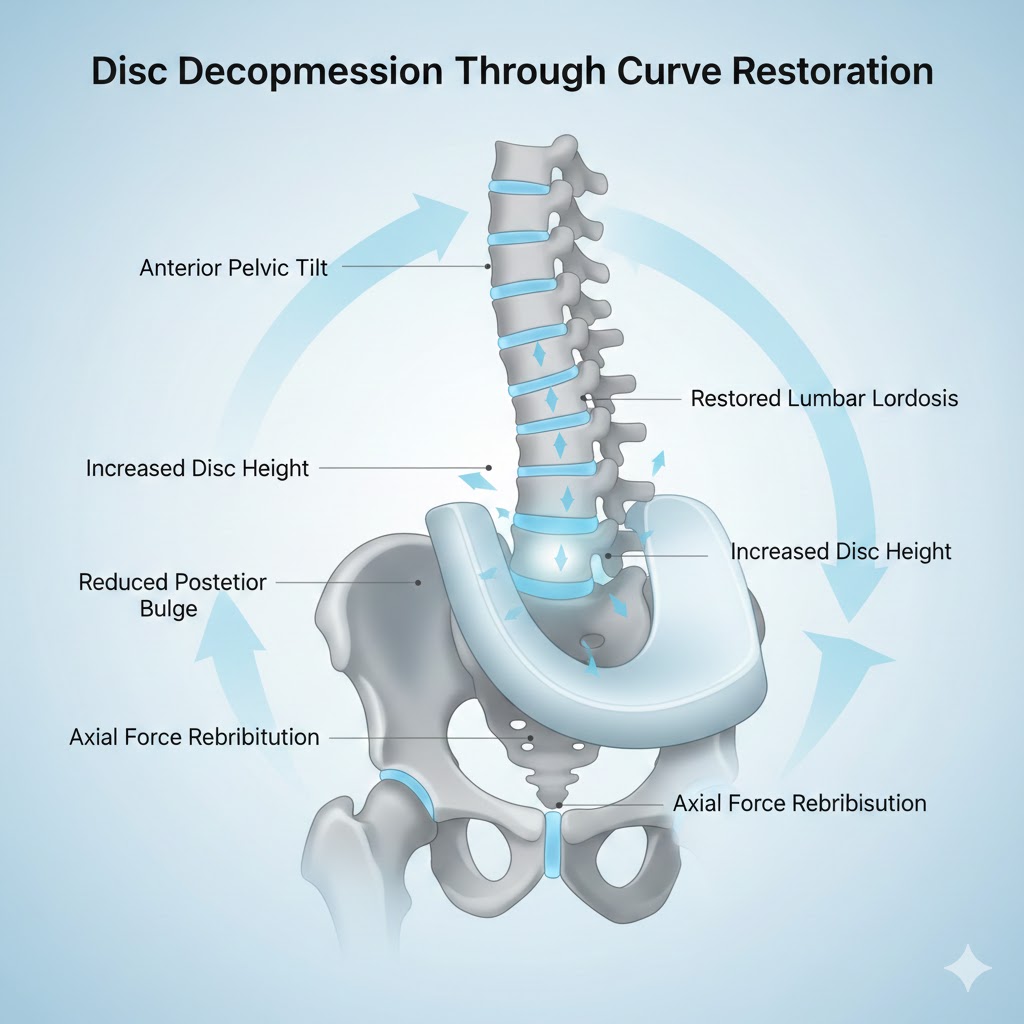
1. Disc Decompression Through Curve Restoration

When the user reclines or sits with the orthotic in place, the device induces a controlled anterior pelvic tilt, which re-establishes the natural lumbar arc. This change in pelvic and spinal biomechanics results in:

  • Reduction of posterior disc bulging due to decreased flexion load
  • Redistribution of axial forces toward the anterior vertebral bodies
  • Increase in intervertebral disc height, especially at L4–L5 and L5–S1
  • Decreased intradiscal pressure, similar to effects seen in extension-based therapies

By reducing compressive forces on the disc, the orthotic helps minimize irritation of the annulus fibrosus, the fibrous ring around the disks and nucleus pulposus structures, (the soft center of the spinal disk, promoting improved disc hydration and mechanical resilience.

1. Disc Decompression Through Curve Restoration

When the user reclines or sits with the orthotic in place, the device induces a controlled anterior pelvic tilt, which re-establishes the natural lumbar arc. This change in pelvic and spinal biomechanics results in:

  • Reduction of posterior disc bulging due to decreased flexion load
  • Redistribution of axial forces toward the anterior vertebral bodies
  • Increase in intervertebral disc height, especially at L4–L5 and L5–S1
  • Decreased intradiscal pressure, similar to effects seen in extension-based therapies

By reducing compressive forces on the disc, the orthotic helps minimize irritation of the annulus fibrosus, the fibrous ring around the disks and nucleus pulposus structures, (the soft center of the spinal disk, promoting improved disc hydration and mechanical resilience.

2. Improved Intervertebral Foramina Patency

As the lumbar curve is restored, the posterior elements of the spine — including the facet joints and laminae — shift into a more open configuration. This results in:

  • Widening of the intervertebral foramina
  • Reduced mechanical compression on exiting spinal nerves (L1–L5 and S1)
  • Alleviation of nerve root irritation caused by stenosis, disc encroachment, or ligamentum flavum thickening

Greater foraminal space supports improved signal transmission along both motor and sensory fibers, which supply organs, muscles, and tissues in the lower body.

3. Enhanced Autonomic Nervous System Function

Because the lumbar plexus influences sympathetic outflow and pelvic organ regulation, decompressing these nerve pathways can support:
  • More efficient autonomic regulation
  • Reduced sympathetic hyperactivity
  • Optimized parasympathetic rebound
  • Improved communication with organs and tissues in the pelvis, abdomen, and lower extremities
By restoring mechanical integrity around these neural pathways, the orthotic promotes more effective neurological function.

4. Soft Tissue Remodeling & Long-Term Stability

When the user reclines on the Perfect Curve Orthodic BackPad, gravity enables a gradual elongation of the ligaments, tendons, and musculature surrounding the lumbar spine. Over time, this encourages:

  • Reversal of Plastic deformation, lengthening of chronically shortened tissues
  • Reversal of postural creep, the gradual lengthening of soft tissues like muscles, ligaments, and tendons due to prolonged, continuous strain from sustained postures
  • Increased flexibility of the anterior longitudinal ligament, band of fibrous tissue that runs along the front of the vertebral column, connecting the vertebrae and intervertebral discs
  • Reinforcement of the lumbar extension pattern strengthen the muscles in your lower back and can help relieve pressure on the discs.

This remodeling process supports long-term maintenance of the restored curvature, contributing to sustained disc decompression and neural freedom.

How It Works

How to Use the Perfect Curve Back Pad

How It Works

How to Use the Perfect Curve Back Pad

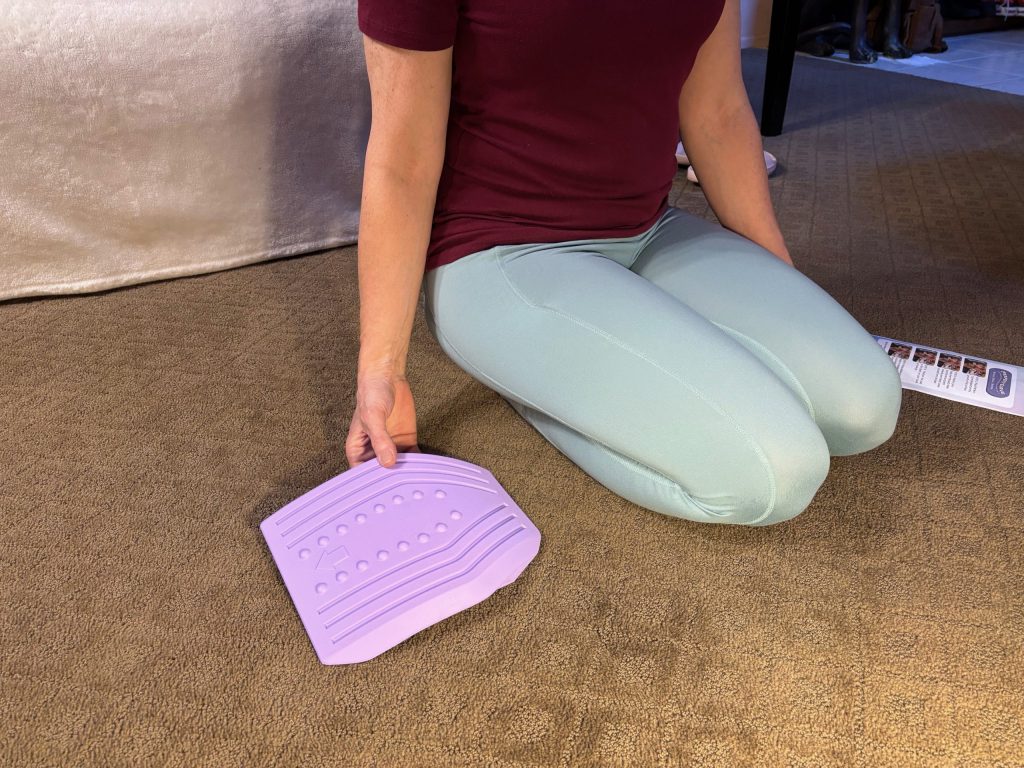
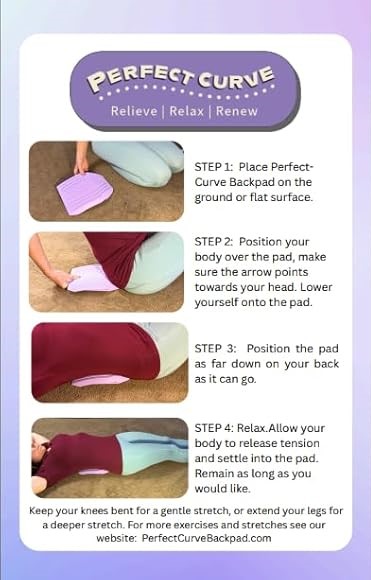
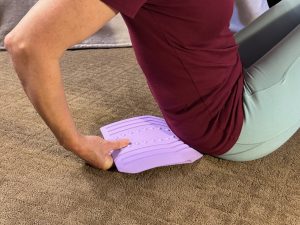
  1. Place It Right
    Set the Perfect Curve Back Pad on a flat surface or floor.

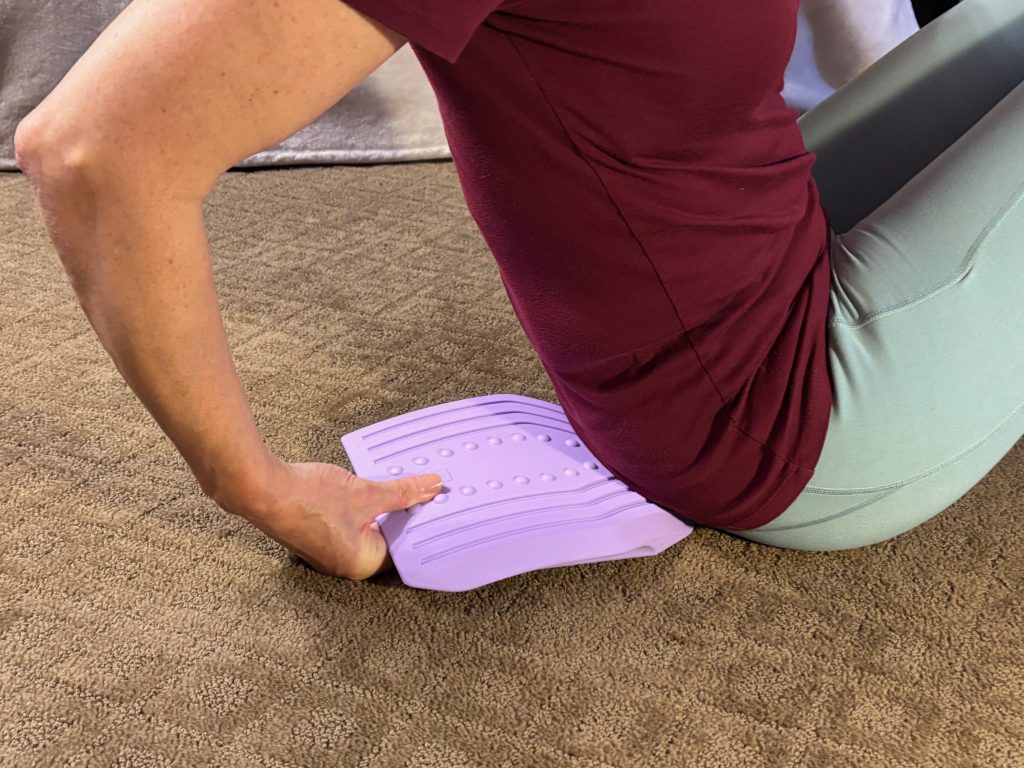
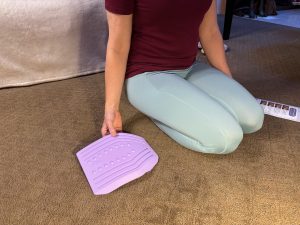
  2. Position Your Body
    Lie down so that the arrow points face toward your head.

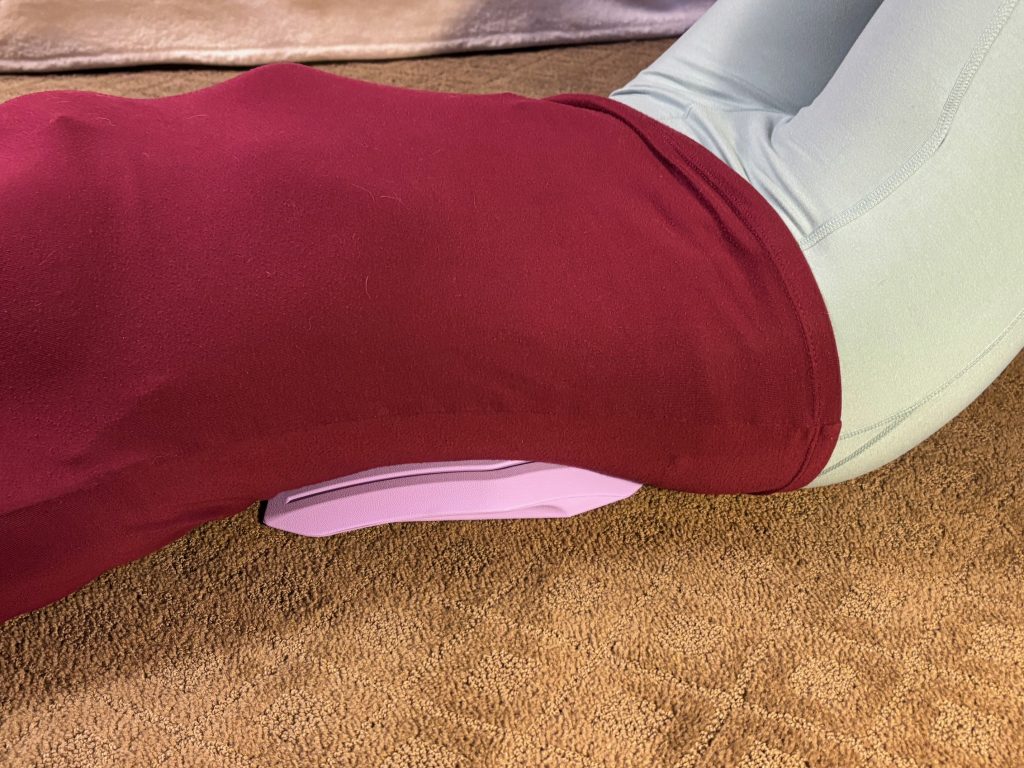
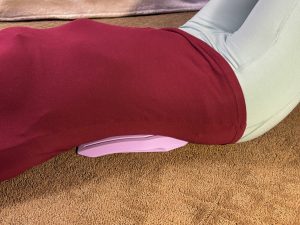
  3. Align Correctly
    Slide the pad down to rest as low on your back as feels comfortable.

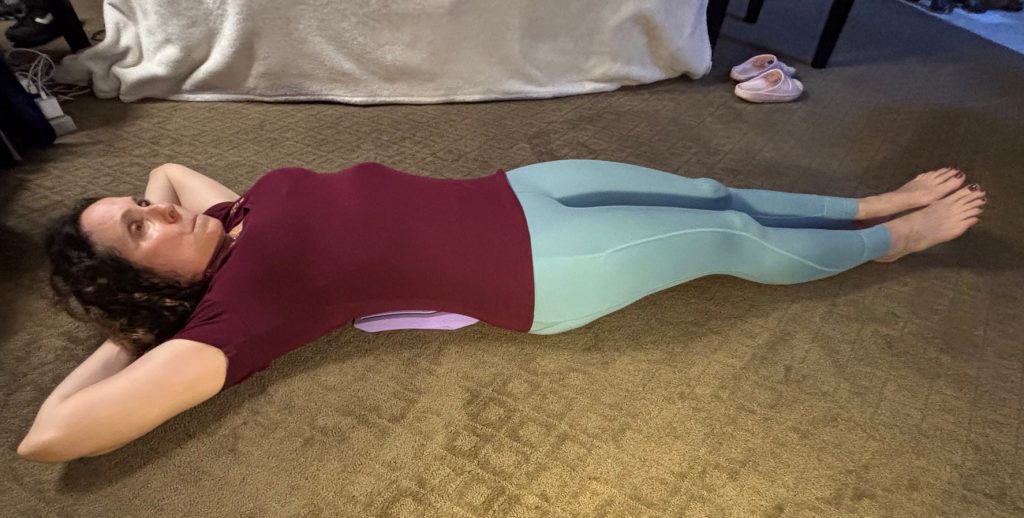
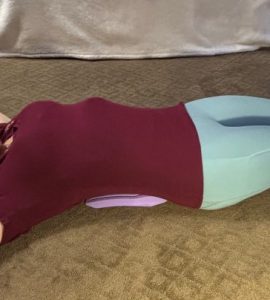
  4. Relax & Release
    Let your body relax, release tension, and settle into the pad. Stay as long as you like.

Step 1

Place Perfect-Curve Backpad on the ground or flat surface.​

Step 1

Step 2

Position your body over the pad, make sure the arrow points towards your head. Lower yourself onto the pad.

Step 2

Step 3

Position the pad as far down on your back as it can go.

Step 3

Step 4

Relax. Allow your body to release tension and settle into the pad. Remain as long as you would like.

Step 4

Step 1

Place Perfect-Curve Backpad on the ground or flat surface.
Step 2

Position your body over the pad, make sure the arrow points towards your head. Lower yourself onto the pad.
Step 3

Position the pad as far down on your back as it can go.
Step 4

Relax. Allow your body to release tension and settle into the pad. Remain as long as you would like. 
best store

Check Our Story

This is dummy text This is dummy text This is dummy text This is dummy text This is dummy text This is dummy text This is dummy text This is dummy text This is dummy text This is dummy text This is dummy text This is dummy text

Our experts

Meet the Team

Jesscia Brown

Co Founder

Kavin Martin

Co Founder

Sarah Albert

Co Founder